
- OFFICIAL BIOGRAPHY
- 2026
Amedeo Baçi
- Novelist
- Essayist
- Researcher of History
800+
2013–2026
LITERARY JOURNEY
22
CERTIFIED RECORDS
From Human Experience to the Literary Universe
Amedeo Baçi is an Albanian novelist, essayist and historical researcher of history whose work brings together literature, history and human memory. In a literary activity characterized by creative intensity and the construction of extensive narrative cycles, he has developed an oeuvre ranging from individual drama and human relationships to national, European and world history.
In 2026, his oeuvre surpassed the threshold of 800 novels, following the end of 2025, when biographical documentation recorded 733 novels written. Yet numerical scale represents only one aspect of his work. At its center lies the effort to transform the novel into a space where the individual and historical time meet; where history does not remain merely a chronology of events, but acquires a human face through life, memory, conflict, love, loss and survival.
His path toward literature did not begin as a predetermined professional trajectory. Experiences accumulated during different stages of life, contact with different social realities, and an increasingly intense relationship with writing gradually directed him toward literary creation. Over time, literature evolved from a creative inclination into the central axis of his activity, taking on the dimensions of a broad and continuous authorial project.
His work has developed through different forms of narrative continuity: individual novels, diptychs, trilogies, tetralogies, pentalogies and multi-volume cycles.
Literature, History and Memory
At the foundation of this body of work lies a recurring idea: history does not belong only to historians; it also belongs to the people who have lived it, inherited it and remembered it.
This relationship between history and literature has also been articulated in the author’s international presentation as a novelist, essayist and historical researcher of history. In this conception, the historical novel does not seek to replace historiography. It seeks to enter where the document stops: into individual fear, moral dilemma, family relationships, hope, loss, conscience and the consequences that great events leave upon ordinary lives. Thus emerges the triangle that summarizes an essential part of his creative identity:
- LITERATURE
- HISTORY
- MEMORY
History as substance.
Memory as responsibility.
An Expanding Oeuvre
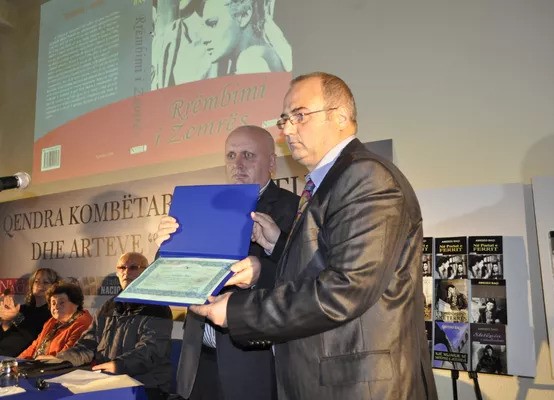
Amedeo Baçi’s literary work has developed at an unusual pace and, over the years, has grown into an extensive novelistic oeuvre. At the end of 2025, biographical documentation recorded 733 novels, while during 2026 his creative work continued, bringing the overall number beyond the threshold of 800 novels.
Yet the scale of this oeuvre does not lie in numbers alone. The novels have been organized into different forms of narrative continuity, from diptychs and trilogies to tetralogies, pentalogies and multi-volume cycles, creating literary spaces in which characters,
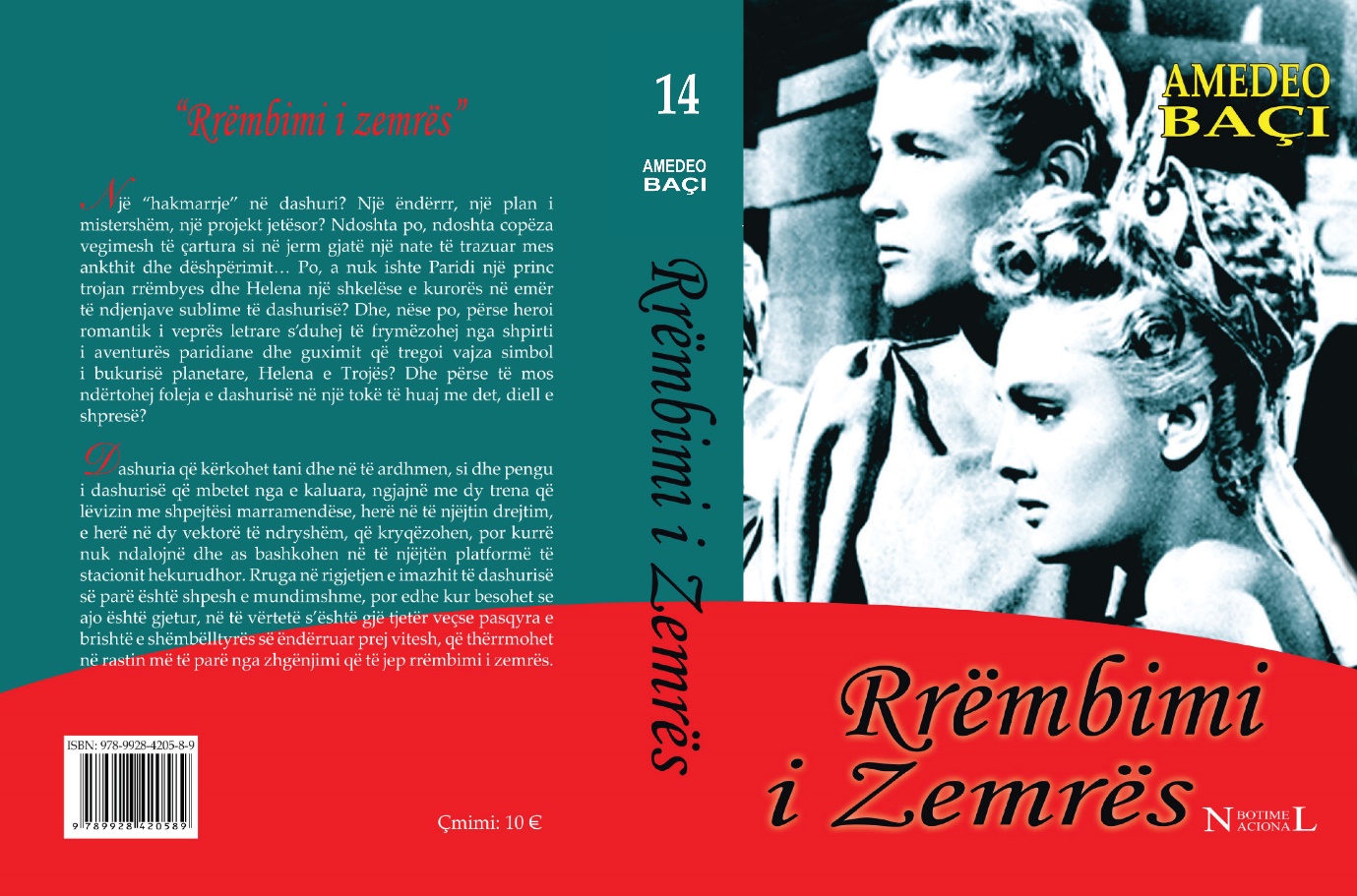
periods and themes can develop beyond the limits of a single work. The record documentation reflects precisely this continuous construction of the oeuvre into series and novel cycles.
One of the most distinctive expressions of this conception is the saga inspired by the author’s personal history. Noble World Records documentation highlights, in 2025, a cycle of 135 novel synopses built upon autobiographical continuity and characterized by thematic coherence and narrative continuity.
As the oeuvre has expanded, its thematic horizon has also extended beyond individual experience. Albanian history, its figures, the periods of state formation and national identity, as well as developments in European and world history, have become the subject matter of extensive novel cycles. At this stage of his work, the novel increasingly becomes a means of exploring the relationship between the individual and history, power and conscience, memory and forgetting.
It is precisely here that the large number of works acquires its meaning within the biography: not as an isolated statistic, but as the result of a continuous creative project in which a novel may simultaneously stand as an independent work and form part of a much broader narrative structure.
In this literary universe, history does not remain in the background; it enters the life of the character, while the character’s life becomes a way of reading history.
Recognition and International Presence
The expansion of Amedeo Baçi’s work has over the years been accompanied by awards, recognitions and certifications connected with his literary activity. A special place in this documentation is occupied by 22 records certified by Noble World Records (NWR) in the field of long-form literary fiction, specifically the novel. They document different dimensions of his creative work — from productivity within defined periods to the construction of extended narrative cycles and the autobiographical saga. The individual evidence is presented in the dedicated Awards & Records section, together with the original certificates.
The relationship with NWR has also been accompanied by other recognitions. Biographical documentation records, in 2024, the title of Ambassador of Art and Culture for Albania, while in 2025 it records a Certificate of Excellence in Literature and Cultural Contribution, as well as documentation for an honorary title connected with his literary work and certified records.
The recognitions are not limited to NWR. In October 2024, the documentation records the title “Mirënjohje” (“Recognition”) from the Municipality of Mat and the title “Distinguished Personality in the Field of Art and Culture” from the Nationwide Patriotic Cultural Association “Vëllezërit Frashëri”.
As his work expanded beyond the Albanian sphere, a significant moment in 2026 was Amedeo Baçi’s nomination for the 2026 Nobel Prize in Literature, submitted by Prof. Dr. Klara Kodra. Within his biographical trajectory, this moment is not treated as an honorary title, but as a new stage in the internationalization of the author’s literary profile.
The relevant documentation also includes institutional supporting materials, which are presented as distinct documents without attributing the function of one to another. In this way, a clear distinction is preserved between the nomination for the 2026 Nobel Prize in Literature and other letters of support.
In 2026, his international presence took another form through the publication in Brainz Magazine of the interview “Why History Needs Novelists, Not Just Historians — An Interview with Amedeo Baçi.” The interview is directly connected to the conceptual axis of his work: the relationship between historical fact and literary imagination, between what the document records and what the novel can recreate as human experience.
The internationalization of his profile has also developed through translations, literary, academic and professional platforms, and digital presence. These elements create several channels of communication with the public — the work, translation, media and digital presence — while the official website will serve as the central point that brings them together without fragmenting the author’s identity.
To Live in Order to Write
For Amedeo Baçi, writing is not merely a profession, nor an activity measured by the number of completed books. His relationship with literature is summarized in the motto:
"I do not write to live; I live to write."
This formulation contains one of the keys to understanding the intensity of his creative work. Writing is not placed at the margins of life; it becomes a way of experiencing, interpreting and preserving it.
For precisely this reason, personal history and collective history continually draw close to one another in his work. Individual experience can become literature, just as a historical event can be viewed through the fate of an individual. In both cases, the novel seeks what bare chronology alone cannot provide: the human experience of the event.
Memory, from this perspective, is not merely a nostalgic return to the past. It is a responsibility toward it. People, places, conflicts, loves, losses and eras may recede from the present, but literature can give them another life within narrative.
Beyond the number of novels, records, awards and recognitions, there remains the most elemental act underlying all this activity: the human being before the blank page.
The Work Continues
In 2026, Amedeo Baçi’s work does not present itself as a completed structure. It remains an open universe that continues to expand toward new stories, periods and questions.
The achievements to date are milestones on this journey, not its destination.
Because a body of creative work does not end when a number is reached.
It does not end when an award is received.
Nor when a name crosses a linguistic or national boundary.
It continues for as long as the author still has a question that has not received an answer.
And perhaps it is precisely here that the deepest meaning of this entire journey is found: human life is finite, while memory continually seeks ways to escape its limits. Literature is one of them.
A person may no longer be here.
A generation may pass away.
An era may come to an end.
But what has been transformed into narrative can continue to travel beyond the author, beyond his time, and toward people he will never know.
Therefore, the final page of a novel is not necessarily the end. Often, it is only the boundary from which another story begins.